


What Is ThermalAged Brown Lumber and Who Is It For?
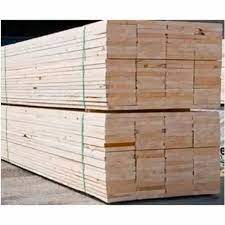
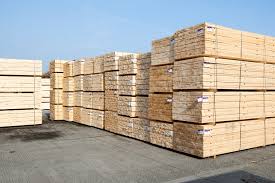
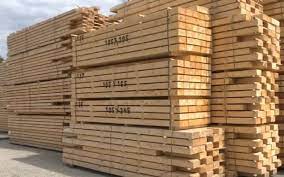
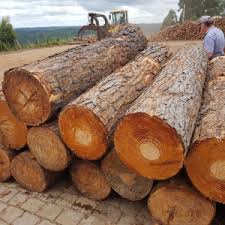
ThermalAged Brown Lumber is a thermally modified wood product processed to achieve a distinctive brown coloration, reduced moisture content, and a more dimensionally stable profile than untreated lumber of the same species. It is produced from a range of source materials, including new lumber, beetle-killed or dead-standing timber, weathered stock, and material reclaimed from salvage projects. The result is a versatile wholesale lumber product that suits procurement teams, millwork distributors, building material wholesalers, and contractors sourcing interior and exterior cladding materials in volume.
Buyers evaluating lumber price per board foot for specialty modified products will find this program offers a controlled color output and documented species flexibility that standard framing lumber or commodity softwood cannot replicate. It is not a structural product. Its value lies in appearance, color consistency, and the measurable processing benefits of thermal modification.
Species Composition and Source Material
This is a mixed-species program. The supply draw may include Pines, Firs, Spruce, Larch, Oak, Elm, Hickory, Hemlock, Ash, Maple, Beech, Poplar, Cedar, and other commercially available species. The default composition skews heavily toward softwoods unless a hardwood-dominant run is specifically ordered. Mixed species means any combination, including an all-one-species run, is within specification.
Source material falls into four documented categories:
- New lumber run through the thermal modification process
- Lumber cut from beetle-killed, fire-killed, or dead-standing trees
- Lumber cut from material that has weathered outside of standard dimensional spec
- Lumber reclaimed from various salvage and deconstruction projects
Material that is antique or reclaimed in origin is generally labeled as such at the time of sale. Wholesale buyers placing volume orders should specify their source preference at the inquiry stage.
Dimensional Specifications for B2B Buyers
The following standard dimensions apply to unmilled ThermalAged Brown Lumber. All figures describe nominal designations and actual ranges:
| Dimension | Nominal | Actual Range |
|---|---|---|
| Thickness | 1 inch | 5/8 inch to 4/4 |
| Thickness | 2 inch | 1-1/2 inch to 8/4 |
| Width | Random | 4 inch to 10 inch (12 inch often available; actual up to 7/8 inch over nominal) |
| Length | Standard run | 6 ft to 16 ft |
Board ends that fall below 5/8 inch in thickness are generally left on the board to maximize buyer flexibility in the field, but those ends are excluded from the board footage tally at invoicing. Buyers should account for trim falldown in their take-off calculations.
Where tighter tolerances are required, thickness planing and edging processing options are often available. Contact the sales team to confirm current processing availability before committing to a specification on a project bid.
Hardwood and Softwood Pricing Factors for Thermally Modified Lumber
Lumber price for thermally modified product differs from commodity framing lumber pricing because thermal modification adds a processing step with defined energy and time costs. The final per-board-foot price depends on species mix, requested dimensions, processing options (planing, edging, siding profiles), order volume, and the source category of the input material.
For reference, the U.S. market tracks dimensional softwood framing lumber in dollars per thousand board feet on futures and cash markets. Wholesale hardwood lumber is typically quoted per board foot by species, thickness (expressed in quarter-inch increments, e.g., 4/4, 8/4), and grade. ThermalAged Brown Lumber sits outside both of those commodity categories. Its pricing is best understood as a specialty modified product, not a commodity softwood substitute.
Buyers sourcing wholesale lumber at volume should submit a formal quote request with the following details to receive an accurate landed price:
- Required board footage or container volume
- Preferred species or species mix (softwood-dominant vs. hardwood-included)
- Nominal dimensions and lengths needed
- Desired siding configuration or milling requirements, if applicable
- Destination port or delivery address
- Project timeline and delivery window
Framing Lumber Market Context for Procurement Teams
The broader lumber market is driven by supply-and-demand cycles tied to housing starts, mill capacity, and trade policy. Softwood framing lumber futures trade on the CME under physical lumber contracts, and those benchmark prices influence the cost of raw input material used in programs like ThermalAged Brown. Procurement teams tracking the framing lumber market trend should note that thermally modified products carry a processing premium above the raw commodity price, but that premium can represent favorable value when color consistency, dimensional stability, and non-commodity character are required by the project specification.
Buyers who monitor softwood lumber market reports from sources such as Madison’s Lumber Reporter will understand that input costs for any modified wood program move with the underlying commodity. Building this assumption into project cost modeling is sound procurement practice.
Surface, Color, and Texture Characteristics
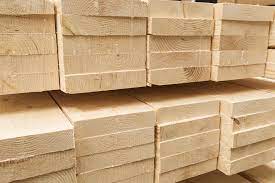
The original face of ThermalAged Brown Lumber is generally rough-sawn, produced by either circle-saw or band-saw methods. The color range targets medium to dark browns, and the brown pigmentation extends through the full board thickness, not just the surface layer. This is a meaningful distinction for applications involving routed edges, cut-outs, or re-milling on site.
Color variation exists from board to board and within individual boards. The featured face is the reference face for color description. Opposite faces and edges can differ in texture and shade. Lighter brown custom color runs are possible in quantities of 7,500 board feet and above. Standard runs do not include a color sort that eliminates all color latitude.
ThermalAged Brown Lumber often carries a mildly burnt odor resulting from the modification process. This is a normal characteristic of thermally modified wood and typically diminishes with exposure to air over time.
Physical Properties and Handling Notes
The thermal modification process affects the physical profile of the wood in several documented ways. Buyers should factor the following into their application planning:
- Weight: Typically 2.5 to 3.5 pounds per board foot, depending on species and moisture content at time of measurement. Thermal modification can reduce weight compared to untreated material of the same species.
- Moisture content: Thermally modified to a low moisture content. Thermally modified wood is widely reported to absorb less moisture than untreated wood, providing improved dimensional stability. No specific quantified claim is made here regarding the degree of that benefit.
- Brittleness: The modification process increases brittleness and reduces mechanical strength. This product is not suitable for structural applications.
- Ground contact: ThermalAged Brown Lumber is not approved or recommended for ground-contact applications.
- Movement: Wood moves. Even thermally modified boards should be installed and stored with that baseline assumption in mind. Post-process exposure to moisture is possible during storage and transit.
- Knots: Unlimited knots allowed; some tight, some loose or fallen out. Loose knots may increase after milling.
- Checking and cracks: Permitted without limit, provided the board remains structurally sound for its intended decorative or cladding use.
Siding Configuration Options for Distributors and Contractors
ThermalAged Brown Lumber is available in several siding profiles for cladding projects. Each configuration has distinct installation assumptions that govern how coverage is calculated. Quantities quoted by coverage area assume 0% installation falldown. Buyers should order additional material to account for actual job-site falldown and any deviation from default installation assumptions.
Board-to-Board, Board and Batten, and Board on Board
These are unmilled siding configurations using standard rough-sawn barnwood lumber. Board-to-board is available in common widths of 4, 6, 8, and 10 inches (or mixed). Board and Batten uses common board widths of 8, 10, and 12 inches with a 4-inch batten and a 2-inch gap assumption. Board on Board uses common widths of 6, 8, 10, or mixed with a 1-inch overlap on each edge assumed.
Shiplap and Tongue-and-Groove (T&G) Profiles
Shiplap is milled with standard face widths of 4.625, 6.375, and 8.375 inches and a target thickness of approximately 23/32 inches. Weathered-face shiplap products carry natural thickness variation. Standard 3/8-inch shiplap joints are milled on opposite edges and opposite sides. T&G is milled in standard face widths of 3, 4.75, 6.5, and 8.5 inches at approximately 23/32-inch target thickness. The fit of barnwood T&G is generally not as precise as flooring-grade T&G, a factor buyers should communicate to finish carpenters.
Wedgelap Profiles
Wedgelap with Rabbet and Wedgelap without Rabbet are both custom products and cannot be returned. The Wedgelap with Rabbet offers more dimensional precision. The Wedgelap without Rabbet involves more inherent variation and a higher likelihood of cupping or splitting over time because it does not sit as flat on the wall. Neither profile includes stress reliefs on the back face. Wholesale buyers ordering these profiles should confirm dimensions and quantities carefully before order placement.
Buyer Considerations for U.S. Import and Wholesale Orders
U.S. importers, distributors, and procurement teams evaluating this product as a lumber supplier relationship should address the following before finalizing an order:
- Application suitability: Confirm with your project team that thermally modified, non-structural lumber meets the specification. This product does not carry a structural rating.
- Documentation: Request available documentation on the thermal modification process, species composition, and moisture content at time of shipment for your project files.
- Volume and MOQ: Custom color runs require a minimum of 7,500 board feet. Standard runs are available in smaller quantities. Contact us to confirm current minimum order volumes for your configuration.
- Processing lead time: Milling, planing, and custom profile work add processing time. Factor this into your project schedule before submitting the quote request.
- Installation responsibility: The seller makes no representations about fitness for a specific application. Installation method selection and on-site handling are the responsibility of the buyer and the installing contractor.
Related Wood Products
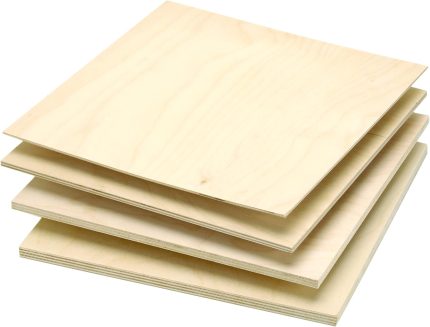
Buyers sourcing structural and engineered panel products alongside specialty lumber may find the following catalog items relevant to their procurement scope. Our Plywood listing covers panel specifications for buyers requiring sheet goods alongside dimensional lumber. Buyers involved in rail infrastructure or heavy timber reclamation projects can review our Oak Railway Slippers for reclaimed hardwood timber supply. For industrial packaging and pallet wood requirements alongside a lumber order, see our Wooden Pallets product page.





Reviews
There are no reviews yet.