

Sesame Seeds: Product Overview for Wholesale and B2B Buyers
Sesame (Sesamum indicum L.) is one of the oldest cultivated oilseed crops on record, with documented use stretching back more than 3,000 years. its cultivation history as an oilseed crop The plant belongs to the family Pedaliaceae and produces flat, ovate seeds that measure roughly 2 mm by 4 mm. Seed color ranges from white and yellow through to grey and black, depending on variety and growing region. Sesame is widely known in trade under regional names including til (Hindi/Urdu markets), goma (Japanese), ajonjoli (Spanish-speaking markets), and benniseed (West African trade).
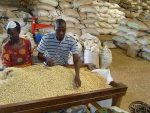
As a Kenya-based exporter, Karmenda Co. Ltd ships sesame seeds to international buyers including U.S. importers, ingredient distributors, health food manufacturers, and food-service procurement teams. Our supply originates from East African growing regions where sesame cultivation is well established. Buyers interested in white sesame seeds or natural brown sesame seeds for bulk purchasing will find both types represented in our catalog.
Varieties and Physical Specifications
U.S. buyers sourcing sesame seeds in commercial quantities typically need to specify the variety and processing state before requesting a price. The two primary commercial forms are:
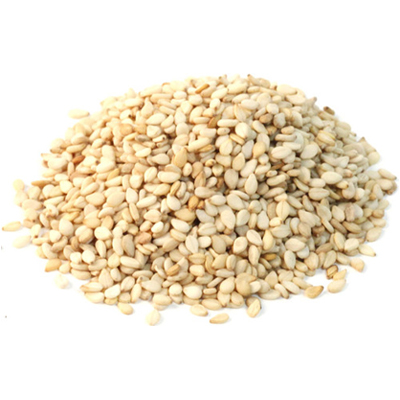
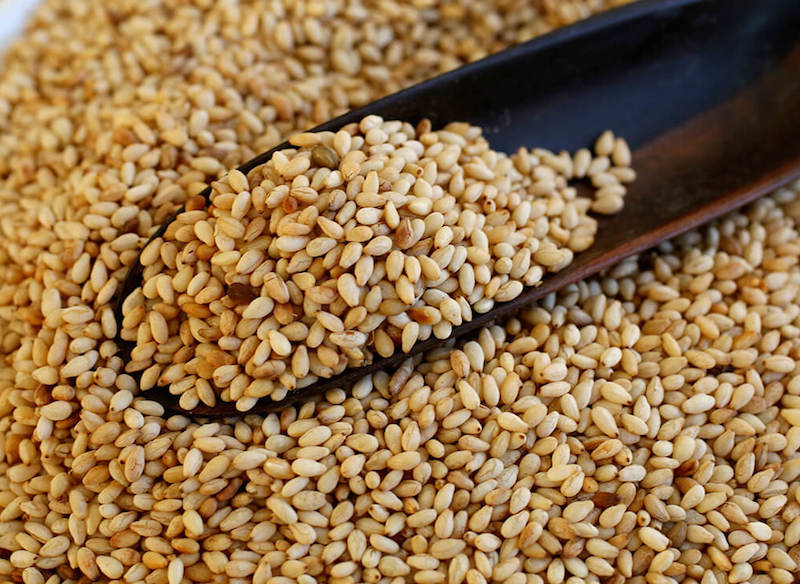
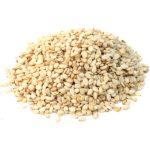
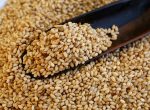
- Natural (Unhulled) Sesame Seeds: Seeds with the outer hull intact. Tan to cream in color, slightly higher in fiber and calcium relative to hulled seeds, and preferred in certain artisan baking, health food, and specialty ingredient applications.
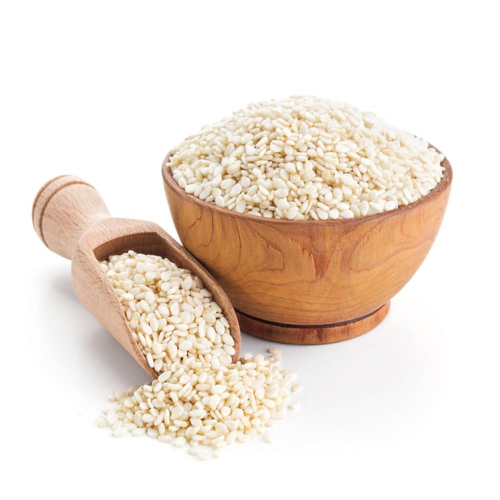
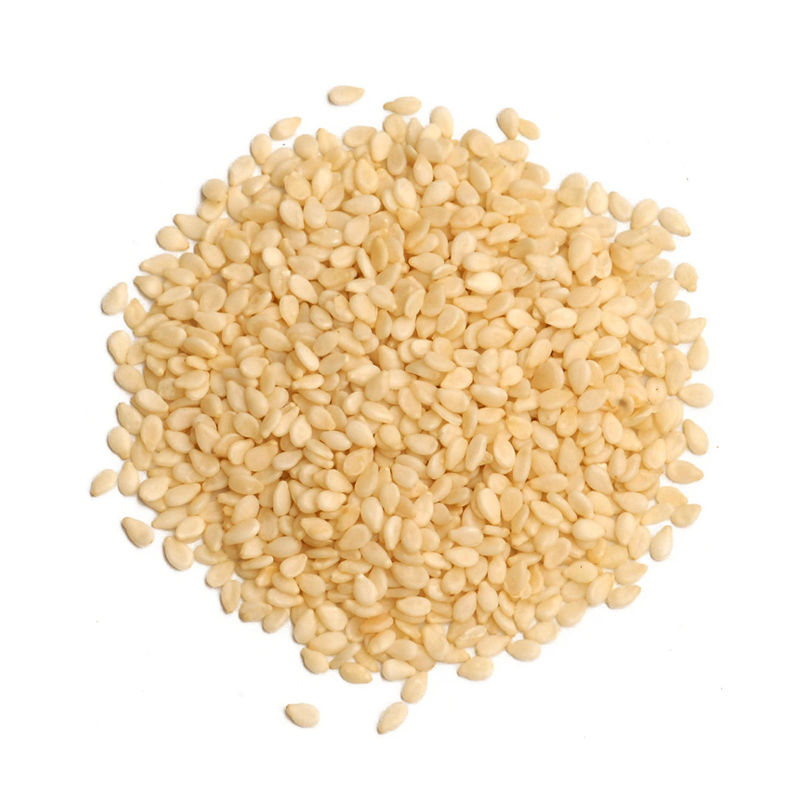
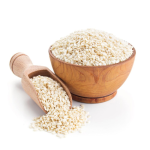
- Hulled (Decorticated) Sesame Seeds: The hull has been mechanically removed, leaving a white, mild-flavored seed. This is the most common form traded for food manufacturing, restaurant supply, and retail pack-out. Hulled sesame is the standard specification for sesame paste (tahini) production and many baked-goods applications.
According to the McCormick Science Institute, sesame seeds contain a notably high oil fraction, sometimes cited at 50 to 60 percent of seed weight, which is why sesame is classified commercially as an oilseed crop as well as a food-grade seed. sesame seed oil content and botanical classification This high oil content affects storage, packaging, and shelf-life planning for wholesale buyers. Seeds should be stored in cool, dry, airtight conditions to prevent rancidity.
Buyers should confirm the following specifications with our team before placing a wholesale order:
| Parameter | Typical Trade Specification | Verified for This Listing |
|---|---|---|
| Seed type | Natural or hulled | Contact us to confirm current availability |
| Moisture content | Max 6% (common export standard) | Unverified for this listing – request COA |
| Purity | Min 99% (common export standard) | Unverified for this listing – request COA |
| Foreign matter | Max 0.5% | Unverified for this listing – request COA |
| Oil content | 50-60% (as reported for the species) | Species-level data, not lot-tested |
| Packaging | 25 kg, 50 kg PP bags or per buyer specification | Contact us to confirm |
Note: Specifications above reflect common trade standards for sesame. Exact certificate of analysis (COA) data should be requested directly. We do not publish lot-specific test results on this page.
Nutrient Profile: What Buyers and Their Customers Need to Know
Sesame seeds carry a dense nutrient load that makes them commercially attractive across food manufacturing, nutraceutical ingredient sourcing, and health-oriented retail. The profile below draws on established nutritional science, not proprietary claims.
Sesame seeds are a meaningful source of fiber, plant protein, healthy fats (predominantly polyunsaturated and monounsaturated), B vitamins, and minerals including magnesium, iron, copper, and zinc. They also contain lignans, a class of plant compounds with antioxidant activity. bioactive compounds in sesame including lignans and tocopherols
Protein and Amino Acid Content
Sesame seeds are recognized as a plant-based protein source containing essential amino acids including methionine, valine, and tryptophan. This amino acid profile is commercially relevant for buyers supplying plant-protein product lines, health food bars, or functional snack formulations.
Calcium and Mineral Density
Unhulled sesame seeds are particularly noted for calcium content. Buyers formulating dairy-alternative or bone-health products should specify natural (unhulled) sesame if calcium density is a product requirement, since hulling removes a portion of the outer seed layer where calcium concentration is higher.
Antioxidant Compounds
Sesame seeds contain lignans, specifically sesamin and sesamolin, along with tocopherols (a form of vitamin E). These compounds contribute to the seed’s oxidative stability and are also of interest to buyers in the functional food and nutraceutical supply chain. Published research identifies sesame as rich in antioxidants, which helps explain both its long culinary history and its growing relevance to health-positioned food brands.
Fats and the Oil Fraction
The fat fraction of sesame seeds is primarily made up of polyunsaturated and monounsaturated fatty acids. This profile supports cardiovascular-health positioning in end-product labeling, though buyers should rely on their own nutritional testing for any label claims. The same high oil content that creates formulation opportunities also requires careful handling and storage in the supply chain.
B Vitamins and Additional Micronutrients
Sesame seeds provide several B vitamins relevant to food labeling, including thiamine (B1) and niacin (B3). Iron, copper, and zinc round out a micronutrient profile that supports positioning sesame-containing products toward nutritional breadth claims. Again, buyers should verify per their own testing laboratory.
Commercial Applications Across Industry Segments
Understanding where sesame moves in the U.S. market helps procurement teams evaluate fit before requesting a wholesale quote. The applications below reflect documented commercial use across food manufacturing and food service.
Baked Goods and Bread Manufacturing
Hulled sesame seeds are a standard topping and inclusion ingredient for hamburger buns, artisan breads, bagels, crackers, and flatbreads. Large-scale bakers typically purchase in 25 kg or 50 kg bags, or by the pallet. Toasted sesame seeds are also traded separately as a value-added form for direct application.
Tahini and Sesame Paste Production
Hulled sesame seeds are the primary raw material input for tahini, one of the fastest-growing ingredient categories in U.S. retail and food service. Manufacturers running tahini lines require consistent purity, low moisture, and reliable hull-removal quality. Importers supplying tahini producers are a significant buyer segment for bulk sesame.
Health Food, Snack, and Supplement Manufacturing
Natural sesame seeds appear in granola, trail mix, energy bars, and seed blends. Sesame also enters the nutraceutical channel as a concentrated lignan or oil extract ingredient. Buyers in this segment often require documentation on pesticide residues and country of origin.
Condiments, Sauces, and Dressings
Ground sesame, sesame oil, and whole seeds are all inputs for Asian-inspired and Middle Eastern condiment manufacturing. Toasted sesame seeds carry a stronger flavor profile and command a premium in this segment.
Sesame Oil Pressing
Because sesame seeds contain 50 to 60 percent oil by weight, they are a viable raw material for cold-pressed or expeller-pressed sesame oil production. Buyers operating oil-pressing facilities or supplying oil producers should discuss seed grade and oil yield expectations before placing a commercial order.
Why Source Sesame Seeds from Kenya
East Africa, including Kenya and neighboring Uganda and Ethiopia, sits within the broader sesame-producing belt that spans sub-Saharan Africa. Sesame cultivation in this region benefits from semi-arid growing conditions suited to the crop. For U.S. importers, East African origin provides supply-chain diversification away from the dominant Asian sources (China, India, Myanmar) and may support origin-labeled or traceable-sourcing product claims.
Karmenda Co. Ltd operates as an exporter based in Kenya. We supply sesame seeds and a range of other pulses and agricultural commodities to international buyers. Buyers interested in combining sesame seed orders with other commodity lines can explore our Pulses category for complementary products including legumes and other seeds.
Export Process and Documentation Considerations for U.S. Buyers
U.S. importers sourcing agricultural commodities must account for FDA registration requirements, phytosanitary certificates, and country-of-origin documentation. The following notes are general guidance only. Buyers should confirm all current regulatory requirements with their customs broker and the FDA prior to placing an import order.
Phytosanitary Certificate
Sesame seeds exported from Kenya require a phytosanitary certificate issued by Kenya’s plant health authority. This document confirms the product has been inspected and meets import country standards for pests and plant health. Request confirmation of this documentation before finalizing any purchase agreement.
FDA Facility Registration
Food facilities that manufacture, process, pack, or hold food for U.S. consumption must be registered with the FDA. Buyers should confirm that their supplier or the relevant processing facility holds current FDA registration. This is a standard due-diligence step for U.S. food importers.
Certificate of Analysis
Wholesale buyers should request a COA from each shipment lot. For sesame seeds, relevant parameters typically include moisture, purity, foreign matter, microbiological counts, and pesticide residue screening. We recommend buyers specify their required COA parameters at the inquiry stage.
Allergen Declarations
Sesame was added to the list of major food allergens under U.S. law as of January 1, 2023 (FALCPA as amended by FASTER Act). Food manufacturers and distributors handling sesame seeds for the U.S. market must include sesame in allergen labeling. This is a material compliance point for any buyer in the food manufacturing or distribution chain.
Packaging and Minimum Order
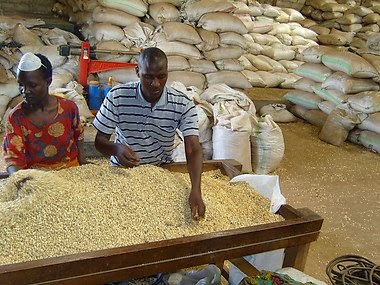
Standard export packaging for sesame seeds is 25 kg or 50 kg polypropylene bags. Container-load quantities are typical for international wholesale orders. Contact our team directly to discuss minimum order quantities, packaging customization, and current lead times. We do not publish fixed MOQ figures on this page because order parameters depend on the specific variety, destination, and shipping period.
How to Request a Wholesale Price or Inquiry
To receive current sesame seeds pricing and a formal export quotation, submit an inquiry through our contact form. Please include the following details to help us respond accurately:
- Seed type required: natural (unhulled) or hulled
- Estimated quantity per order and frequency
- Destination port (U.S. city or port of entry)
- Any specific quality standards, certifications, or COA requirements
- Packaging preference (bag size, labeling needs)
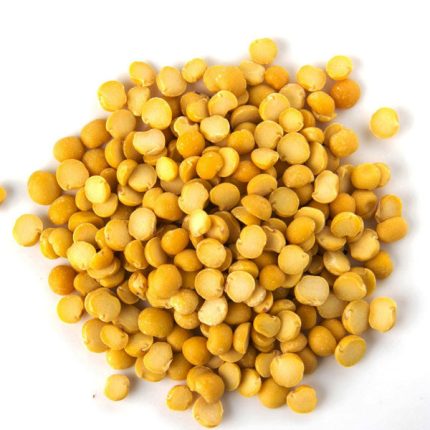
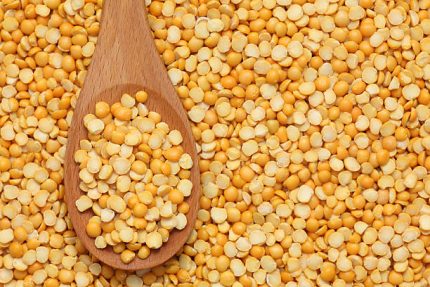
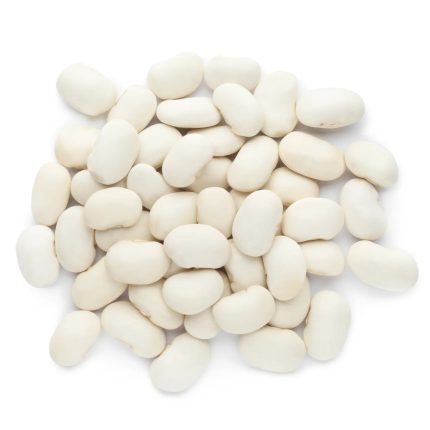
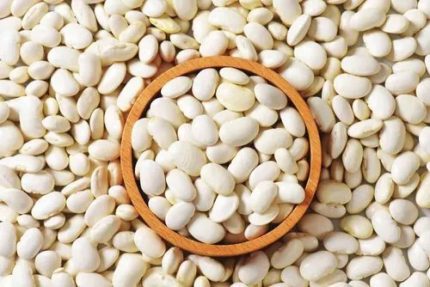
Buyers also sourcing complementary legumes can review White Pea Beans and Split Yellow Peas to consolidate shipments and reduce per-unit freight costs.
Frequently Asked Questions from Wholesale Buyers
The FAQ section below addresses common pre-purchase questions from importers, distributors, and food manufacturers evaluating sesame seed sourcing from East Africa.
For further details on Authoritative reference relevant to buyer guidance, standards or compliance, consult Official Languages.
For further details on Authoritative reference relevant to buyer guidance, standards or compliance, consult Loudoun County, VA – Official Website | Official Website.


Reviews
There are no reviews yet.