




What White Pepper Is and Why Buyers Specify It
White pepper and black pepper share the same botanical source, Piper nigrum, but the processing path diverges after harvest. Where black pepper is dried whole with its outer hull intact, white pepper undergoes a soaking and hulling process that strips the outer skin, leaving the inner seed. The result is a smaller, smoother-surfaced peppercorn with a flavour profile that is less sharply pungent than black pepper but carries a more pronounced earthy, slightly fermented aroma. For food manufacturers and professional kitchens, that distinction has a direct functional consequence: white pepper seasons without adding dark specks to light-coloured preparations.
Procurement teams sourcing for spice blends, seasoning mixes, or foodservice supply chains often specify white pepper specifically for cream sauces, potato-based products, white gravies, risotto, and certain Asian soups and stir-fries where visual cleanliness is as important as heat level. The culinary case for white pepper in those categories is well established across European and Asian cuisines, and professional kitchen usage reflects that preference consistently.
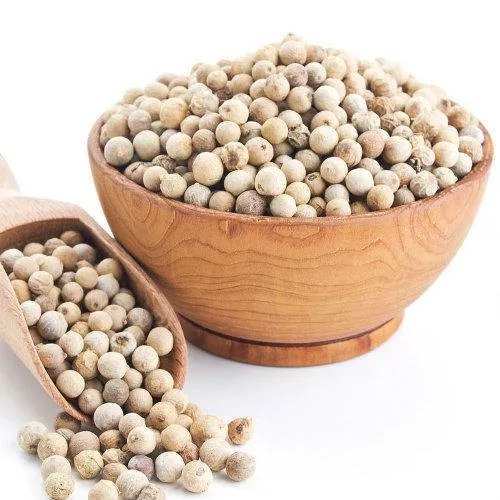
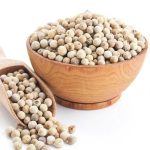
Product Description: Whole White Peppercorns from Kenya
This product is sold as whole white peppercorns under the IISР-Spiisry CoCoSPICE premium brand, supplied by Karmenda Co Ltd, a Kenya-based exporter serving international buyers including U.S. importers, wholesalers and distributors.
Processing and Quality
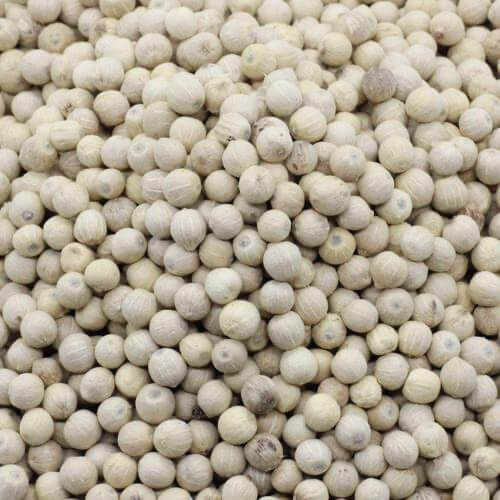
The peppercorns start as handpicked ripe red berries. After harvest, they are soaked in water for an extended period before the outer hull is removed. This traditional method produces a whole white peppercorn with a strong, clean flavour and consistent appearance. No artificial colours, preservatives or scents are used at any stage. The product is described by the supplier as finest quality and is sourced exclusively from registered farmers.
Form and Storage
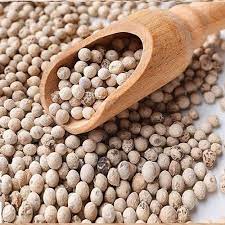
Supplied whole, not pre-ground. Buyers intending to use this as white pepper powder or ground white pepper will need to mill or grind at their facility or point of use. Once a retail or food-service pack is opened, the peppercorns should be stored in an airtight container to preserve flavour and aroma over time.
Note for buyers: Specific packaging formats, minimum order quantities, bulk pack sizes (such as 5 lb, 10 lb, 25 lb, 50 lb sacks or equivalent metric units), and certifications such as USDA Organic, Kosher, or food-safety documentation have not been confirmed in the product record. Contact the supplier directly to obtain current specifications, available grades, and export documentation relevant to U.S. import compliance.
Applications: Where Whole White Peppercorns Fit Commercially
The primary reason food manufacturers and commercial kitchens choose white over black pepper is colour neutrality. Dark pepper specks are visually acceptable in a bolognese or a grilled rub, but they read as contamination or poor quality in a béchamel, a white cream cheese blend, or a pale potato product. White peppercorns solve that problem without sacrificing heat or aromatic depth.
Food Manufacturing and Processing
- Seasoning blends and dry rubs requiring a neutral-coloured pepper base
- White sauce mixes, cream soup concentrates and powdered gravy formulations
- Processed potato products (mashed potato mixes, potato croquette coatings)
- Pale-coloured charcuterie, poultry sausages and white meat preparations
- Asian-style marinades and dumpling fillings where black specks are undesirable
Foodservice and Institutional Supply
- Hotels and high-volume kitchens producing continental menus
- Restaurant groups running French, Scandinavian, or pan-Asian concepts
- Catering operations supplying pale-coloured sauces and side dishes at scale
Whole peppercorns give buyers maximum flexibility. They can be cracked for a coarser grind, milled fine for seasoning blends, or used whole in pickling brines and poaching liquids, then removed before service.
Sourcing Origin and Supply Chain Position
Karmenda Co Ltd operates from Nairobi, Kenya. The company positions itself as a direct-to-buyer exporter procuring from registered farmers in recognized growing regions, and the white pepper offered here falls under the IISР-Spiisry CoCoSPICE brand, which the supplier describes as a premium spice sourcing programme. Buyers evaluating a new overseas supplier will typically want to verify phytosanitary certificates, FDA prior-notice filing capability, and any applicable food-safety management documentation before placing the first commercial order. Those details should be confirmed through a direct inquiry.
For U.S. importers, working with a Kenya-origin supplier for spices such as white peppercorns is commercially viable. Kenya has an established agricultural export infrastructure, and spice exports to the U.S. follow standard FDA import pathways. Buyers should request current lot documentation, moisture and foreign-matter specifications, and any relevant food safety audit records as part of standard supplier qualification.
Buying in Bulk: What to Ask Before You Order
Procurement teams evaluating bulk white peppercorns for import should clarify the following before committing to an order:
- Grade and specification: Berry size, moisture content, foreign matter tolerance and volatile oil content (white peppercorns typically contain approximately 1-2% volatile oil, though this should be verified for this specific lot).
- Pack sizes available: Whether the supplier can fulfill standard U.S. bulk formats such as 25 lb, 50 lb, or metric-equivalent sacking.
- MOQ and lead time: Minimum order volume and estimated lead time from order to port of loading.
- Export documentation: Phytosanitary certificate, certificate of origin, commercial invoice, and packing list. U.S. buyers may also need an FDA prior-notice filing reference.
- Sampling: Whether pre-shipment samples are available for internal quality approval before full-volume commitment.
Use the contact or quote request form on this page to submit your requirements. The more detail you provide about pack format, destination port, and required documentation, the faster a relevant quotation can be prepared.
White Pepper vs. Black Pepper: A Practical Comparison for Buyers
Both forms come from the same plant. The processing difference, not the plant variety, produces the distinction in colour, aroma, and end-use suitability.
| Factor | White Pepper (Whole) | Black Pepper (Whole) |
|---|---|---|
| Outer skin | Removed by soaking and hulling | Retained, dried whole |
| Colour impact in dish | Minimal, no dark flecks | Visible dark specks |
| Flavour character | Earthy, slightly fermented, aromatic | Sharp, pungent, resinous |
| Primary use case | Light sauces, pale preparations, Asian soups | General seasoning, dark or bold dishes |
| Professional kitchen preference | High in European and Asian fine-dining contexts | High across all general use categories |
Buyers sourcing for private-label spice lines or foodservice distribution should note that stocking both forms is common practice. For spice blend manufacturers, having a reliable bulk white peppercorn supplier separate from your black pepper source gives greater formulation flexibility.
Related Products in Our Spice Catalog
Buyers sourcing white pepper for blending, seasoning or export frequently pair it with other premium whole spices. Our Spices catalog includes other high-demand commodities. Green Cardamom is frequently combined with pepper in chai blends and spiced meat preparations. Nutmeg is another traditional pairing in white sauces and béchamel-based formulations where visual cleanliness matters.
Request a Wholesale Quote
Pricing for bulk white peppercorns varies with order volume, pack format, shipping terms (FOB, CIF, or DAP), and seasonal supply conditions. No pricing is published here because wholesale orders are quoted individually based on your specific requirements. Submit a quote request with your target volume, preferred pack size, destination, and any certification or documentation requirements, and we will respond with current pricing and availability.



Reviews
There are no reviews yet.